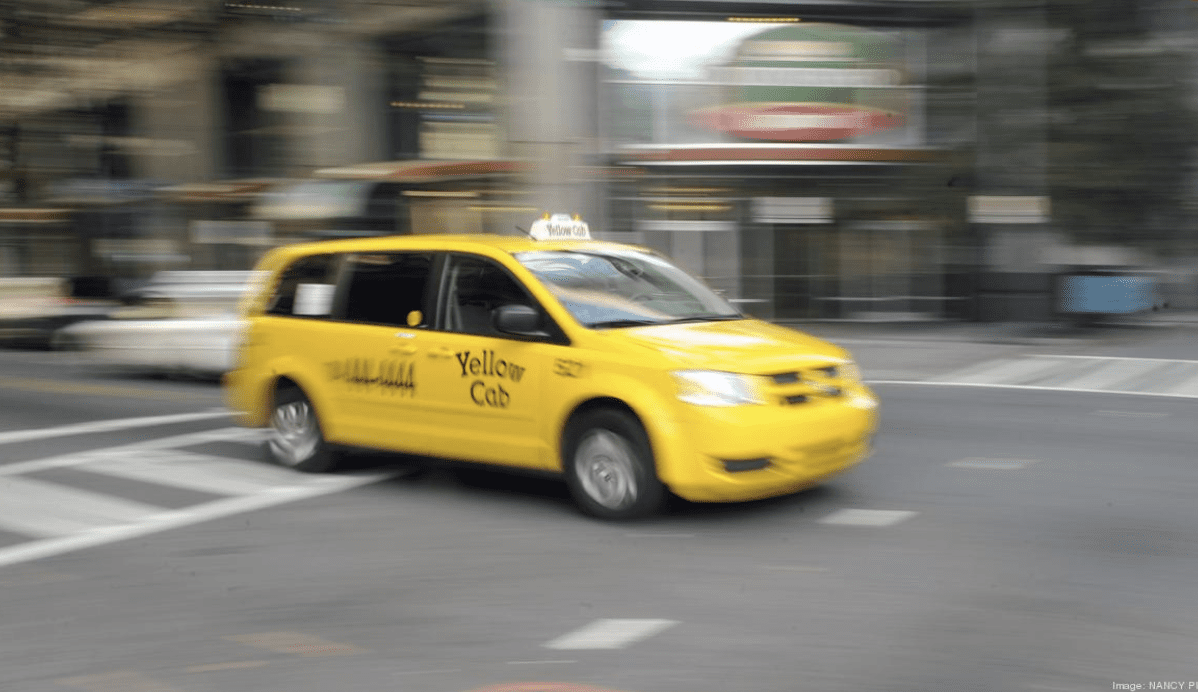

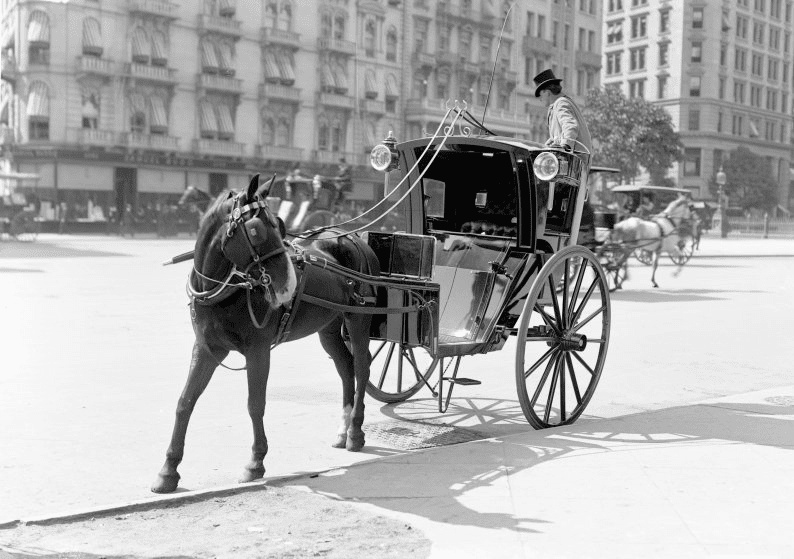
Imagine Houston at the dawn of the 20th century—a city where dusty roads were just beginning to transform into wide avenues, and the streets still echoed with the sound of horse-drawn carriages. At this pivotal moment, at the crossroads of the old and new worlds, the first automobile taxis appeared. These symbols of progress would become an inseparable part of the city’s history. They didn’t just change the way people moved; they reflected the spirit of innovation inherent to Houston, a city that would later become the cradle of space technology and modern transportation solutions. Read on at i-houston to learn the history of this essential city service in Houston.
The Dawn of Urban Transportation
As Houston grew in size and population, the need for faster transportation became critical. Besides water transport along the Buffalo Bayou, the city was also accessible by land. While cargo was typically moved by water, people preferred to travel overland. In the late 19th century, this was done by stagecoach. Enterprising business owners of that era operated several carriages that could be hired for travel to or from Houston. Of course, the cost of such a journey was considerable, so only the truly wealthy could afford a trip by stagecoach.
However, the era of stagecoaches in Houston was brief. With the arrival of the railroad, travel became significantly cheaper and, more importantly, safer. This spurred the city’s rapid growth and development. But within the city itself, residents relied on horse-drawn carriages for their local travel for a long time.
The appearance of automobiles in the early 1900s ushered in a new era of urban transport. At the time, a car was a great rarity, a luxury only a few could afford. But a start had been made. Navigating Houston’s city streets by car was no easy task; the roads were unpaved, making driving a real ordeal, especially in rainy weather. Another major obstacle for Houston’s early motorists was the lack of gas stations. Since there were so few cars, building them wasn’t profitable. Drivers had to stock up on fuel in neighboring towns.
Starting in 1908, car ownership became more accessible to the general public with the release of the Ford Model T, known as the first mass-produced automobile. The number of drivers in the city began to grow. In 1910, the first car dealership opened, offering several models. Houston quickly adapted to the new trends of the century, and cars became a common sight on city streets. It was during this time that the first taxis appeared, though they were initially just individual drivers who would transport residents to their destination for a fee.
The First Yellow Cabs
Officially, the first cars used exclusively for transporting people were launched on the streets of New York City in 1907. The fleet’s owner was Jacob Hertz, and it was his idea to paint the taxis yellow. He was deeply invested in his business and sought every possible advantage to attract customers. Hertz had read a study claiming that yellow is the color most easily seen by the human eye. Without a second thought, he decided to paint all the cars in his taxi fleet bright yellow.
It worked. Against the backdrop of the era’s dark-colored cars, the yellow taxis stood out clearly. The bright color was easy to spot in a sea of vehicles, especially at night. Jacob Hertz’s idea proved so successful that New York City officials later made yellow the official standard for all licensed taxis operating in the city. The concept spread, and soon, most cities across the U.S. had taxi companies with fleets of yellow cars.

Yellow Cabs Arrive in Houston
Houston soon caught on to this trend. In the 1920s, the first organized taxi companies began to appear in the city. One of the oldest was the Yellow Cab Company, which became a key player and, for a long time, held a monopoly in the market. This era also saw the introduction of the first taximeters, which ensured fare transparency and allowed customers to calculate the cost of their trip.
The company was founded and owned by George Cummins. However, until the 1960s, the company only had a few cars. A major breakthrough came in 1967 when Cummins decided to significantly expand the taxi fleet by purchasing used cars. According to urban legend, only 30 of the purchased cars actually started. While this may be an exaggeration, there were clearly issues with the vehicles, because a year later, George built his own service station complete with repair, paint, and body shops. This allowed the company to repair its cars quickly and cost-effectively.
The yellow car business thrived. By the early 1970s, just ten years later, the fleet had grown to over 700 vehicles. This growth was likely fueled by the demographic boom that began around that time. The city was growing by leaps and bounds, and Houston’s Yellow Cab company rushed to keep pace.
The increasing number of customers forced the company to adapt. To handle the ever-growing volume of orders, the company upgraded to an 8-channel radio system, which allowed it to use six radio frequencies simultaneously.
To demonstrate a commitment to passenger safety, the company’s next innovation was installing a third high-mounted central brake light on all Yellow Cabs. By the early 1980s, these lights were on every car in the fleet. This modernization proved to be justified. According to studies, it reduced the number of rear-end collisions by half. In 1986, the U.S. National Highway Traffic Safety Administration even mandated these brake lights on all new passenger cars.

Challenges on the Horizon
After many years of success and service to the city, the Yellow Cab company faced a series of setbacks. First, the oil bust of 1982-1987 forced staff reductions, particularly affecting dispatchers. To avoid further layoffs, Yellow Cab acquired bankrupt taxi companies in nearby Austin, a move that also allowed it to use the smaller market as a testing ground for new ideas.
After surviving that period, the market began to digitize. To stay afloat, the company had to transition from radio dispatch to computer and mobile data terminals. This again required new investments and equipment upgrades, leading to further staff reductions.
Among its innovations, Yellow Cab was one of the first taxi companies to introduce credit card payments. Since the public was still wary of this new payment system, the company implemented a verification and control system to ensure transparency and win residents’ trust. By 1991, passengers could safely pay for their rides in Houston with credit cards. This innovation boosted Yellow Cab’s revenue by 10%.
In an unprecedented move, the company installed a security camera in every taxi. These cameras helped protect both the passenger and the driver by taking photographs throughout the trip. This data was sent to law enforcement and could be used to identify offenders. The system proposed by Yellow Cab was the first of its kind in the U.S. and only the second in the world.
COVID-19 became the next major challenge. The pandemic caused the company to lose significant revenue, and recovering from the blow proved impossible. In 2021, Yellow Cab declared bankruptcy and was sold to a new transportation company, zTrip. The new owner continues to provide passenger transport services today, honoring the lasting traditions established by Yellow Cab over its 75-year history.