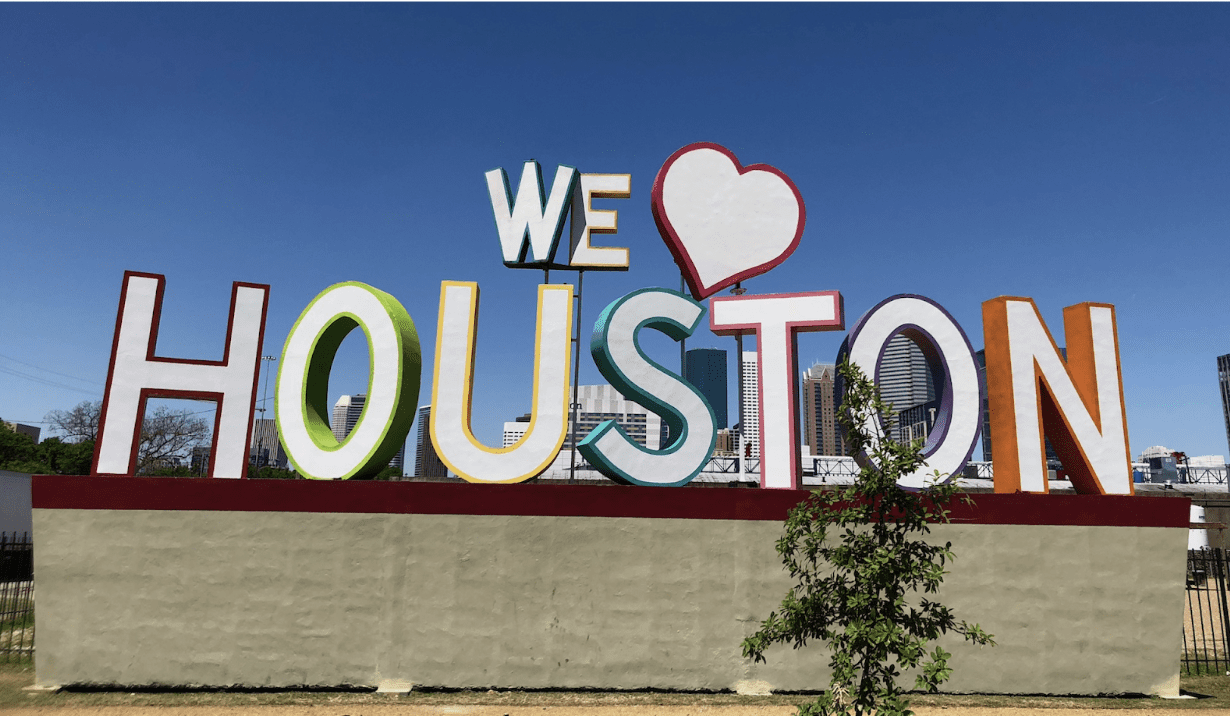

Today, Houston is a modern urban center with a rich history, unique culture, and vibrant symbols that reflect its significance in various fields. Over its nearly two-hundred-year history, it has seen it all: soaring highs and devastating lows, groundbreaking achievements and crushing failures, immense challenges and incredible discoveries. Through it all, Houston has been forged in the crucible of time to become the metropolis it is today. But behind the city’s modern facade lies a rich history woven into every street. Over time, the city has acquired many symbols that, when seen or heard, immediately bring Houston to mind. There are dozens of these evocative symbols, and here, we explore some of the most iconic among them. Read more at i-houston.
“Houston, we have a problem”
This famous phrase is known the world over, now used to signal that unforeseen trouble has arisen. It has become one of the most famous lines in the history of space missions and is firmly embedded in popular culture. However, the story behind it is far from pleasant. It originated during the Apollo 13 mission in 1970 when an oxygen tank exploded onboard the spacecraft. Reporting the incident back to Earth, crew commander Jack Swigert uttered the phrase that would later become iconic. The subsequent film of the same name, which received nine Oscar nominations, only further cemented its place in our cultural lexicon.
Since its first utterance, the phrase has been used millions of times in books, films, music, internet memes, and even commercials. It continues to be widely used on social media as well. However, it likely wouldn’t have become so popular if the mission had ended in tragedy. Fortunately, despite the critical failure, the astronauts managed to return safely, though the spacecraft was lost. For NASA, it was a crucial lesson that led to a thorough overhaul of its safety and communication systems. Despite the turmoil, the Apollo 13 mission is regarded as one of the most famous in history, and Houston gained a catchphrase that became a symbol of the city known worldwide.
The Space Center, NASA, and All Things Cosmic
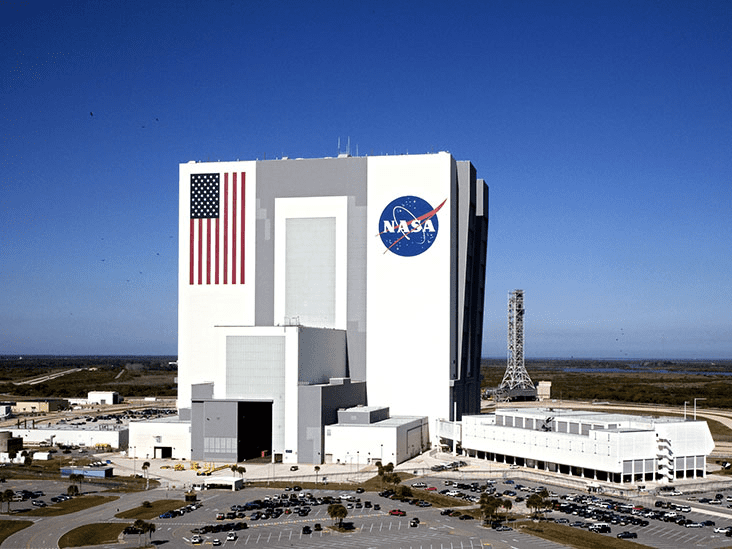
Houston is also known as “Space City,” a nickname it began to embrace in the mid-20th century. This was the era of the space race between the USSR and the USA. In 1961, President John F. Kennedy set the ambitious goal of being the first to land on the Moon, and significant funds were allocated to achieve it. After a search for a suitable location for a new space base, Houston was chosen. The area offered plenty of open land for the construction of a space center, and its mild southern climate, favorable weather conditions, and convenient access to the launch sites at Cape Canaveral made it an ideal choice. And so, the Lyndon B. Johnson Space Center was established on the outskirts of Houston, becoming the primary hub for astronaut training and flight control. After successfully achieving its goals and beating the USSR in the space race, Houston became a symbol of success in the space industry and will forever be known as Space City.
From that point on, a space theme became central to Houston’s identity. AstroWorld, a theme park that became a beloved part of the city’s cultural heritage, was created. The city’s Major League Baseball team was named the Houston Astros in honor of the city’s connection to space, and countless other events and entities have tied themselves to the cosmos.
The Oil and Energy Capital of the World
In the early 20th century, Houston began to develop the numerous oil fields discovered in the region. With the development of new technologies and high demand for fuel, the city attracted a flood of interested investors. In a short time, Houston became the headquarters for the largest oil companies in the entire United States.
The fame of Houston’s oil quickly spread worldwide. The city began hosting symposiums and seminars that drew delegates from all over the globe. Houston became the place where industry innovations and the environmental impact of drilling were discussed, and where fundamental policies on energy resources were established. As a result, Houston earned its title as the energy capital of the world, and with it came symbols like oil derricks, energy corporations, and the versatile NRG Park complex.
JPMorgan Chase Tower and Williams Tower
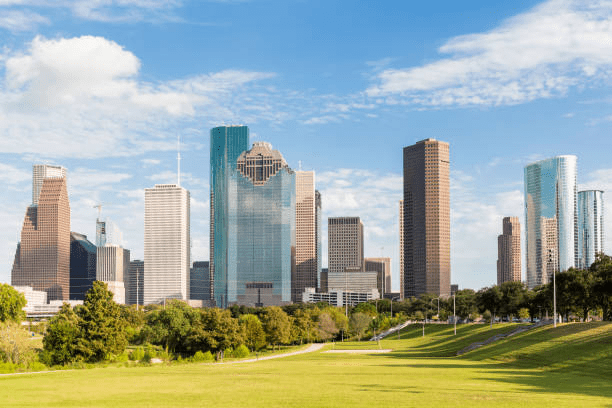
The skyscrapers JPMorgan Chase Tower and Williams Tower are two more of the city’s iconic symbols. These buildings are instantly recognizable and immediately signal that the conversation is about Houston. The JPMorgan Chase Tower is a landmark building constructed in 1981. At 1,002 feet (305 meters), it remains the tallest building in Texas and the fifth tallest in the United States. The building has 75 floors, covering over 2.2 million square feet, primarily occupied by office space.
From the very beginning, the project was intended to be a symbol of Houston, so the best and most modern materials of the time were used in its architectural design, planning, and construction. The building is distinguished by its five-sided shape, which creates an illusion of varying geometry, its granite facade, and its mirrored windows.
The Williams Tower is another iconic office building in Houston that also stands as a symbol of the city. It is slightly shorter than its counterpart, but its height is still impressive. A powerful searchlight is installed on the roof of the tower, and at night, its beam can be seen from up to 30 miles away.
Buffalo Bayou
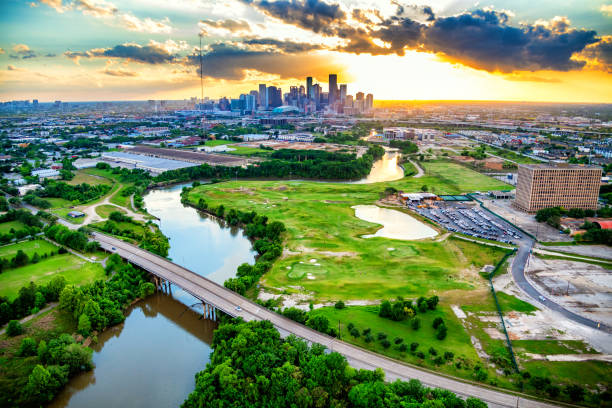
Among the city’s natural symbols, the Buffalo Bayou is a must-mention. This river is intrinsically linked to Houston’s identity. The city’s entire history is inseparable from this body of water. Its banks have witnessed Houston’s development from its very founding by the Allen brothers in 1836. The river has been a silent observer of all the city’s key events and continues to be the heart of the metropolis today.
Several parks line the banks of the bayou, serving not just as recreational areas but as beloved gathering spots for Houstonians for all kinds of occasions, from a simple weekend outing to a marriage proposal. The riverbanks are also dotted with sports fields. The Buffalo Bayou is, without a doubt, a natural symbol of Houston.
Sporting Symbols
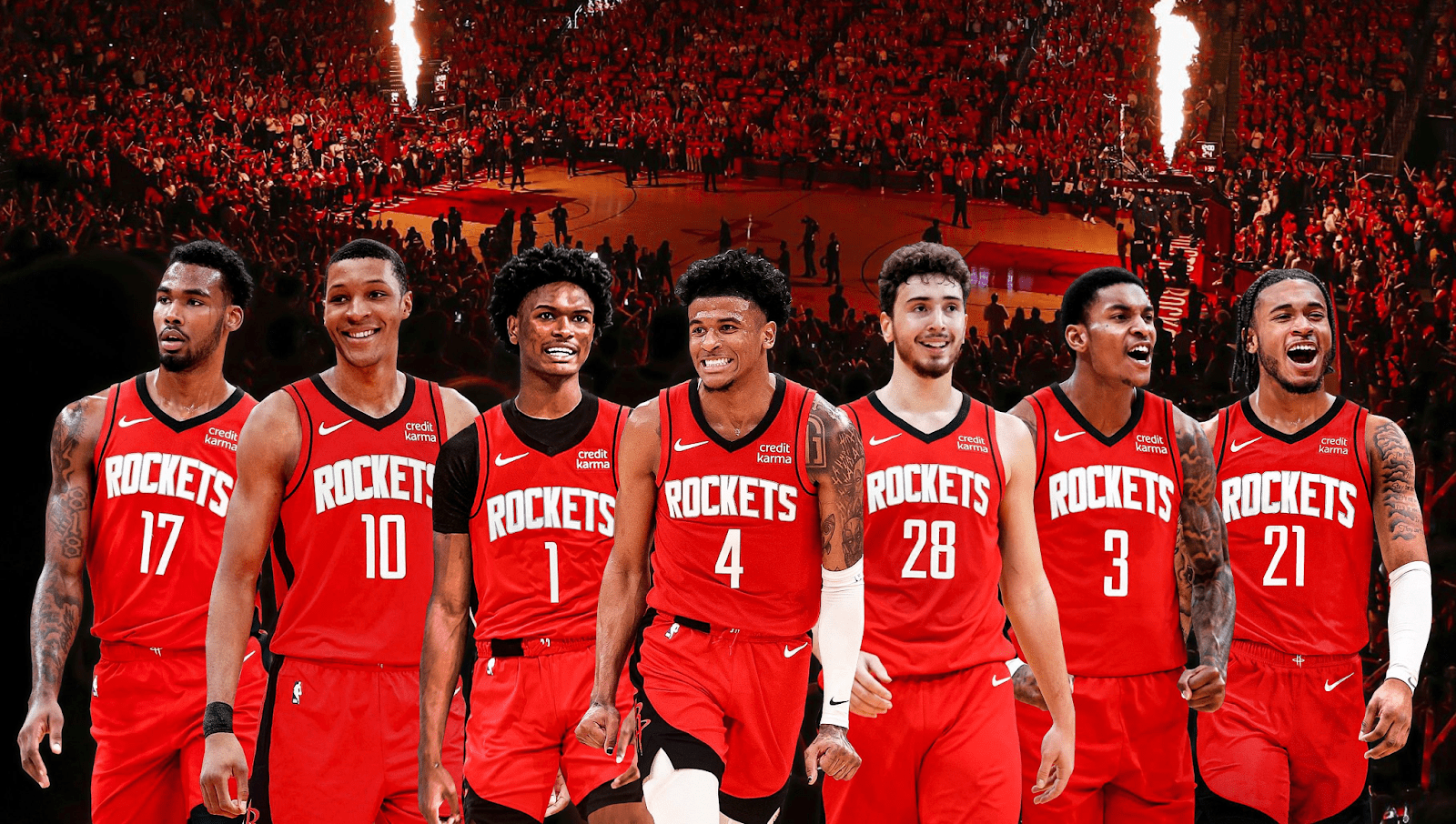
The city is home to many sports, but when it comes to symbols, two teams must be mentioned. The Houston Rockets, an NBA basketball team, have a long and interesting history. Founded in 1967, the team made Houston its home in 1971. The Rockets have won two championship titles and hold a unique record in basketball history: in the 1994-1995 season, they won the NBA championship after starting the playoffs as the sixth seed in their conference. Today, the team is a mid-tier contender, but despite its modest recent success, it remains a local favorite and a sporting symbol of Houston.
The Houston Texans are the city’s NFL team. Although they are the youngest team in the league, founded only in 2002, they immediately became a Houston favorite. The Texans have yet to win a major title, but they consistently fill the stands of the city’s stadium. The Texans are Houston’s pride in the world of American football, symbolizing the energy and determination of their city.
Other City Symbols
We’ve listed only the most iconic symbols of Houston, but the list wouldn’t be complete without mentioning the local cuisine. Dishes like Houston barbecue, fajitas, burritos, and local Tex-Mex are not just favorite foods of the city’s residents; they also symbolize Houston’s multiculturalism and hospitality.
It’s also worth noting the city’s musical symbols, as Houston is home to many musicians. One of the most prominent is rapper Travis Scott’s album “Astroworld,” named after the demolished amusement park that could itself be considered a symbol of the city’s past.
Among others, it’s important to mention the city’s Theater District, which covers an entire block and is one of the largest in the United States.
Houston’s motto is “The City with No Limits,” which is also a symbol that captures the spirit of the city—a spirit repeatedly confirmed by the creative individuals of Houston. If you aspire to something here, you can achieve it.