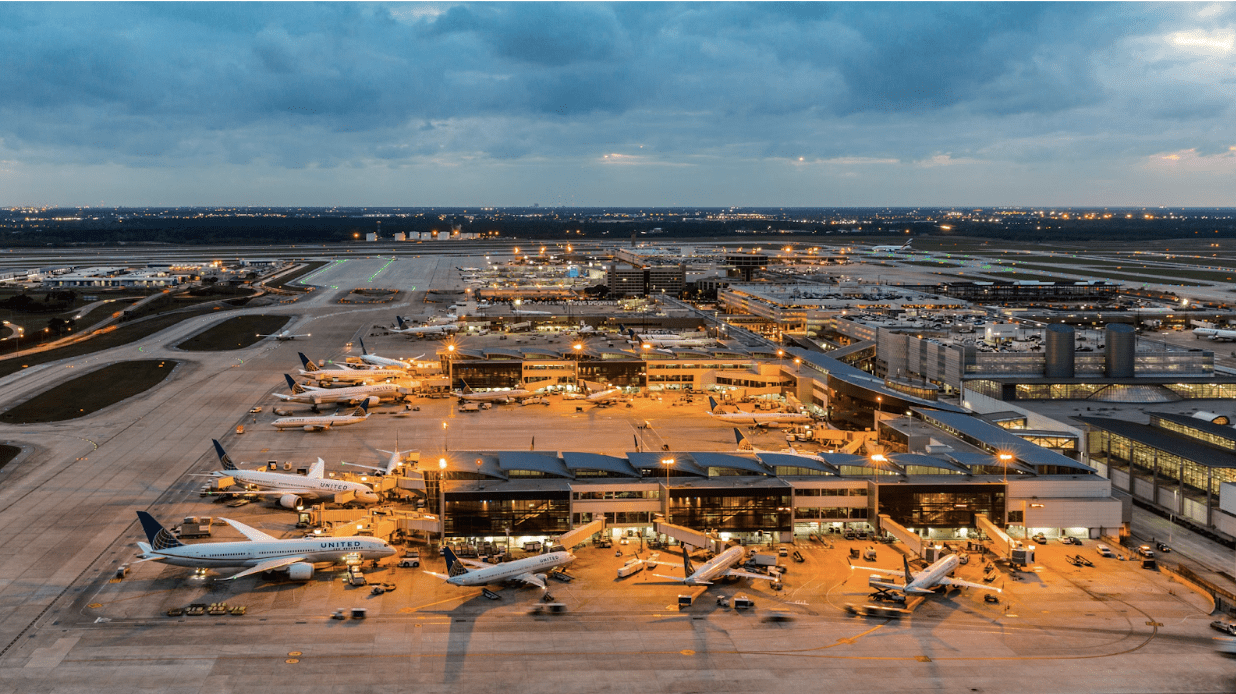

George Bush Intercontinental Airport in Houston connects the city to the entire world. Every day, aircraft from dozens of airlines transport tons of cargo and countless people. Thanks to the airport, business leaders, philanthropists, and everyday travelers and tourists can reach any continent in just a matter of hours. The importance of this piece of infrastructure can hardly be overstated. Read on at i-houston to learn more.
Future Plans and a Typo
The first airport in Houston opened back in 1927. Although it was quite small, it had the grandiose name “Houston International Airport.” The city was developing rapidly, and after some initial skepticism, residents began to appreciate the benefits of air travel. Passenger traffic grew daily. City officials understood this, and the need for a new airport was becoming urgent, so plans were made to build a new, larger air hub. But for the time being, this was just a long-term plan.
In 1957, a group of Houston businessmen, anticipating that the construction of a new airport would be delayed while the city expanded at a frantic pace, purchased a plot of land for the future air gateway. An amusing mishap occurred with this land purchase. The holding company, created specifically to buy the land for the airport, was given the ambitious name “Jet Era.” However, a mistake was made on the typewriter, and the two words were combined into one: Jetero.
For a while, the newly built airport was actually called “Jetero Airport.” Many years later, long after the oddity was mostly forgotten, the eastern entrance to the airport was named Jetero Boulevard. The nearby Will Clayton Parkway was also formerly Jetero Boulevard. And that’s how a simple typo led to the naming of locations connected to the airport.
The Undoing of Ambitious Investments
By purchasing the land for the future airport, the city’s entrepreneurs intended to later sell the plot to the city, reaping a hefty profit. But the authorities had other plans. They simply annexed the parcel of land along with two adjacent districts, justifying the move as necessary for infrastructure development. To ensure the action didn’t look like outright theft, an equally sized plot of land was allocated far beyond the city limits. It was on this new site that construction of the new airport began in 1965.
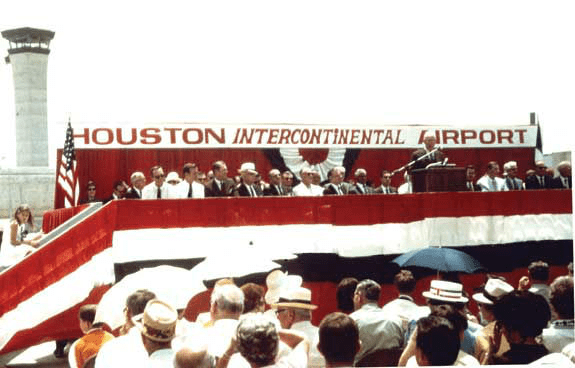
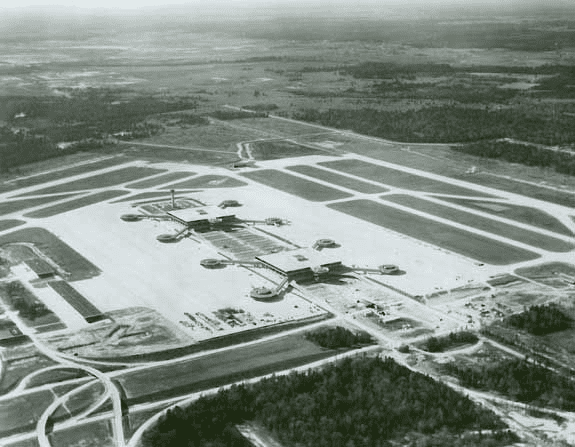
The construction lasted for four years, delayed by numerous factors. Initially, the new airport was planned to have 13 terminals, but these ambitious plans had to be scaled back due to a lack of funds. The project’s financing repeatedly stalled, leading to construction worker strikes and halts in the building process. The city had to turn to private investors for patronage. The design was revised several times, and in the end, five terminals were built before construction was declared complete. In June 1969, Houston Intercontinental Airport was officially opened.
The old airport also remained operational, but it was primarily used for domestic and charter flights.
A New Name for the Airport
In the late 1980s, the city council considered renaming the airport. The first proposal was to name it after U.S. Congressman Mickey Leland, who had tragically died in a plane crash in Ethiopia. After lengthy discussions, it was decided to name the international arrivals building in his honor instead. Today, Terminal D is named after the African American congressman, Mickey Leland.
In April 1997, the Houston City Council unanimously voted to rename the airport George Bush Intercontinental Airport. The 41st President of the United States, George H.W. Bush, had deep ties to Houston. He worked there as a young man, spent his time there after his presidency, and made significant contributions to the city’s economic and cultural development. Renaming the airport in his honor was a well-deserved tribute.
The Airport Today
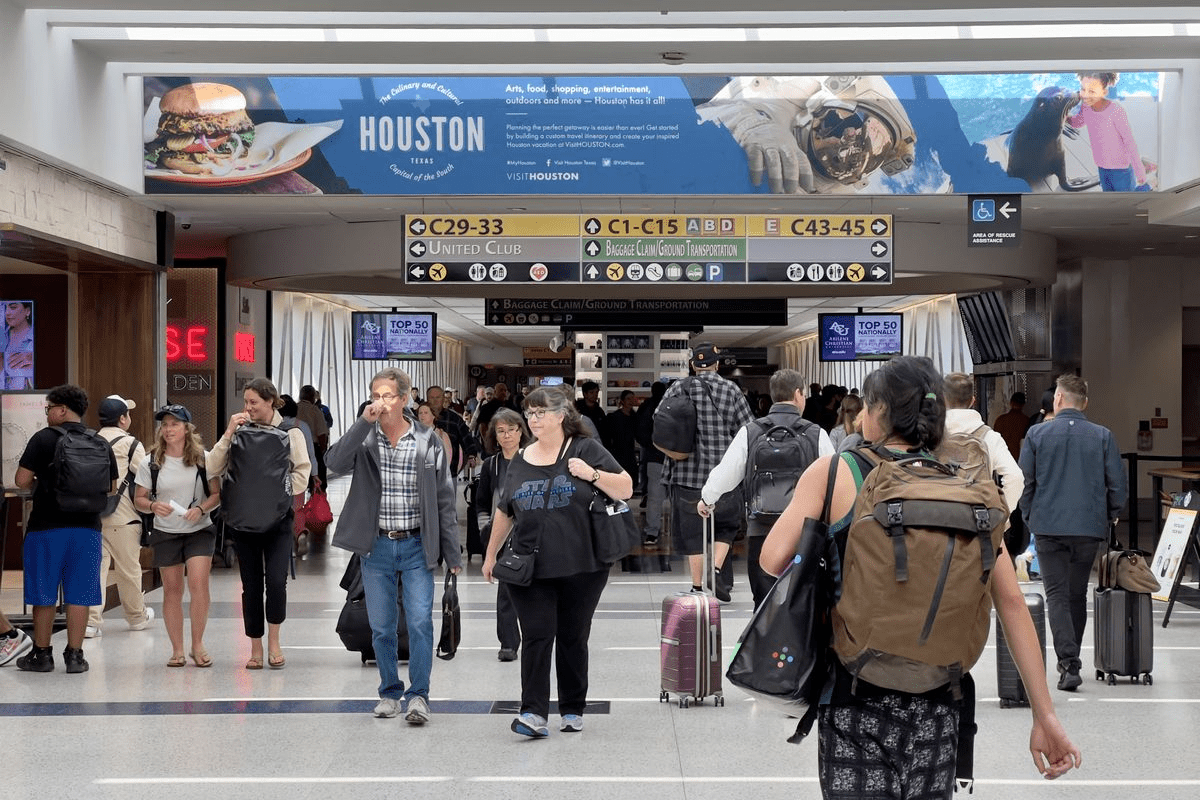
By the start of the 21st century, the airport was one of the ten busiest in the United States. As of 2024, George Bush Intercontinental Airport has 5 terminals and 121 gates. Each terminal is connected by an automated people mover system. There is also an underground train, the Subway, which runs every three minutes, connecting all five terminals and the airport hotel. Three of the five terminals are equipped to handle international wide-body aircraft, including the largest planes like the Boeing 747-8.
In 2023, the airport’s passenger traffic exceeded 46 million people, and this number continues to grow.
The Skytrax World Airport Star Rating, a company that evaluates the quality of airport services, awarded George Bush Intercontinental Airport in Houston 4 out of 5 stars. It’s worth noting that this company considers a vast range of factors in its ratings, from the usability of the website to the cleanliness of the restroom stalls. Earning a 4-star rating is a significant achievement, meaning the Houston airport truly deserves the recognition.
George Bush Intercontinental Airport is one of the busiest airports in the U.S. by passenger traffic and serves as a primary hub for United Airlines. It plays a critically important role in the development of all of Texas, fostering the economic and cultural growth of the region.