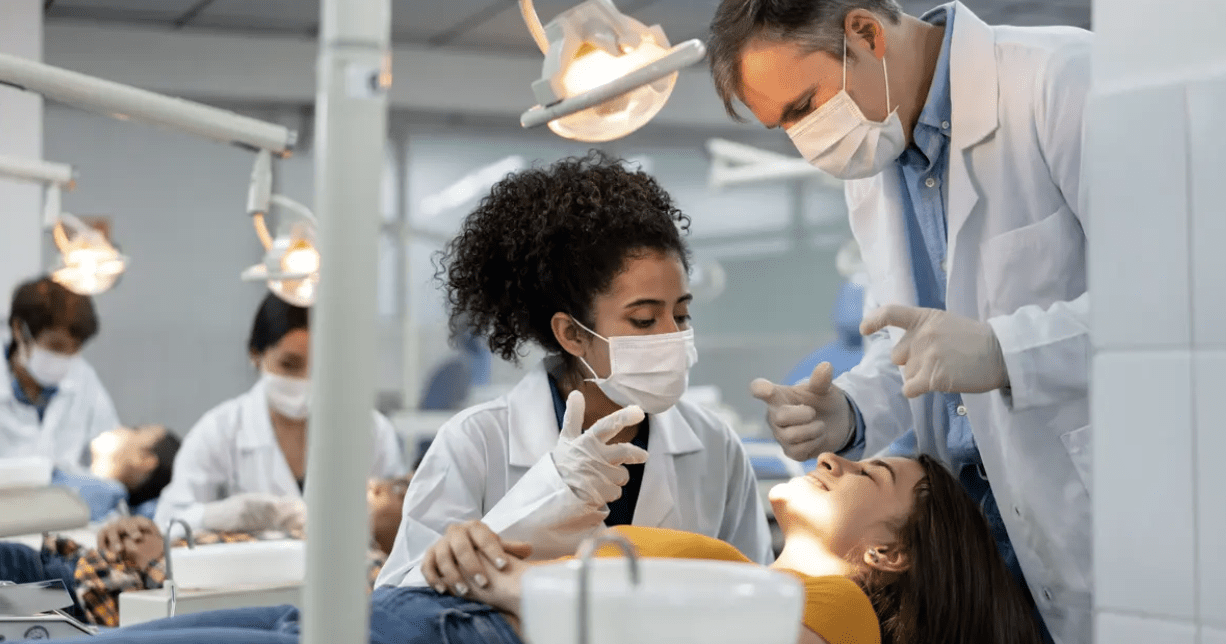

Unfortunately, humans do not possess the unique trait of sharks, whose bodies can regenerate teeth, allowing them to grow throughout their lives. No pulpitis or cavities for them. We can only envy such an ability and must visit the dentist from time to time. How the first dentists emerged and the development of dentistry in Houston is explored further on i-houston.
Treating Teeth and Staying Alive: A Historical Overview of Dentistry
The first dentists, according to archaeological findings, existed as early as the 7th century BC among the ancient Etruscans. This was not merely about extracting diseased teeth; our ancestors sought ways to maintain the ability to chew the tough food of the time. Although these methods were primitive, such as replacing an extracted tooth with one from hunted animals, it was already an attempt at implantation. The first significant changes in dentistry were introduced by the ancient Egyptians, who realized it was better to care for their teeth than to chew with animal implants. Thus, they invented the first toothpaste. When dental problems did arise, Egyptian dentists made the first attempts at filling teeth. If that procedure didn’t work, they would replace the tooth with a suitable one from the dentist’s collection, securing it with gold wire.
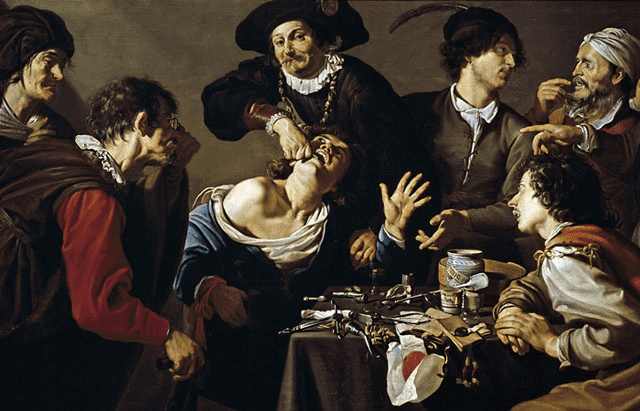
The Middle Ages bypassed the field of dentistry. The issue was ignored and not considered serious. In Europe during this time, dental problems were solved simply—by extraction. This procedure was performed not by doctors but by barbers or blacksmiths. The mortality rate from such procedures was high, as it was easier to introduce an infection than to avoid it. Thanks to such dentists, Louis XIV lost all his teeth at a young age, and a similar “specialist” broke Catherine II’s jaw. What dental services were like for ordinary people is left to the imagination.
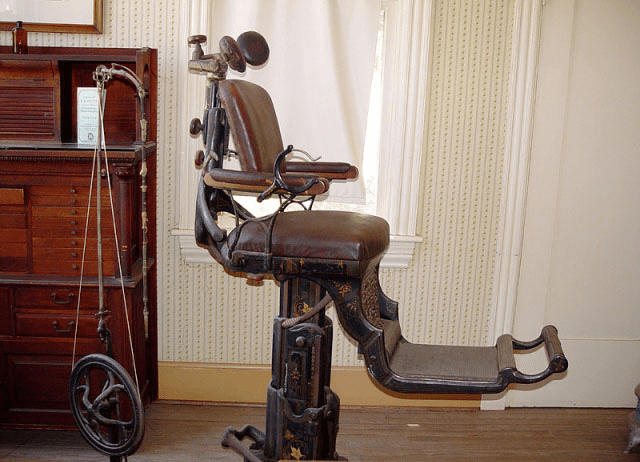
The first true dental surgeries began only in the mid-19th century when drills appeared, methods for removing dental nerves were developed, and filling and prosthetics progressed. The 20th century became a breakthrough for this field: lead, silver from coins, and the highly toxic mercury were no longer used for fillings, and anesthesia became part of dental treatment.
Dentistry in Houston
The first professional dentists in the U.S. appeared in the 18th century with the arrival of students of the most successful European surgeon and founder of dentistry, Pierre Fauchard. One of them, Don Pedro Lartig, arrived in Louisiana in 1783, where he opened his clinic and worked for nearly 24 years. Later, he moved to Texas, where he obtained a license to practice dentistry in 1806. Eventually, other specialists moved to the Lone Star State, and with the founding of Houston, they began practicing in the city. According to the 1850 census, Texas had 13 dentists, by 1960 there were 65, and a decade later, 102. This shows that the profession was needed and beneficial to both the city’s residents and the dentists themselves.
Not all dentists were immigrants. It is known that from 1839, dental schools were established in Maryland, Ohio, New York, and Pennsylvania. Graduates of these schools were eager to move to Texas, which was actively developing and expanding. By 1881, dentists in the state had already united into the Texas Dental Association, which later included 16 other regional associations. In 1883, Houston marked the debut of the “Texas Dental Journal,” the oldest dental periodical in the U.S. and the second-oldest in the world.
Houston’s School of Dentists
The demand for dental services and the development of dentistry led to the establishment of Houston’s own dental school. Thus, in 1905, the Texas Dental College was opened in Houston. In 1943, it was renamed the University of Texas School of Dentistry, and later became the Dental Branch of the University of Texas. Training as a dentist took four years. It was during this time that women began studying dentistry, which had previously been considered impossible due to the physical demands of the profession. A new profession—dental assistant—also emerged. The mid-20th century saw the introduction of new specialties in the Houston dental department, allowing for the training of specialists in oral and maxillofacial surgery, orthodontics, endodontics, periodontics, pediatric dentistry, and prosthetics.
Modern Houston Dentistry
When comparing the 19th century to modern times in the field of dentistry, it becomes clear that humanity has made not just a step, but a groundbreaking leap in this area. Visiting the dentist today, while still unpleasant, no longer causes dread. Pleasant music, a smiling team of doctors, clean and tidy rooms, and the absence of any pain—even during extractions—are now standard. The services are also impressive: from preventive checkups and selecting a new toothpaste, to complex operations involving titanium implants. Today, Houston boasts nearly 2,000 dental clinics offering all possible services, making the city a leader in the U.S. Among them, 200 clinics specialize in pediatric dental care.